When you charge something on your credit card, the merchant usually pays about 2-3% in transaction fees for the convenience and benefit of accepting these cards (it makes it easier for people to spend money with them). In order to get their specific card “in your wallet”, issuers often rebate part of these fees in the form of % cashback rewards or frequent flier miles. This makes sense, because many people with good credit and/or higher spending don’t carry balances so that the primary source of profits is from these transaction fees.

The trick for issuing banks, of course, is to offer as little rewards as possible yet still convince enough people as a group to use the card. The newest trend is to offer a high 3% to 5% back (more than they take in!) but only on a specific group of rotating purchases. Usually the rest earn 1% cashback. If you pay attention to the rules, this can make for some significant savings. I think of it as a Swiss army knife of credit cards; you just need to pick the right one for the job. 🙂 It might even be time to dust off an old card you don’t use anymore.
Here are some popular cards and their current rotating categories. Also, new cardholders can combine with current sign-up bonuses of up to $100 upfront.
Citi® Dividend Platinum Select® Visa® Card
Reward categories change quarterly. From April 1st to June 30th, you can earn 5% cash back on
- Home Depot
- Home Furnishing purchases
- Home & Garden Purchases
After you get your card, you must enroll by logging into your account or calling 1-800-231-0891. There is no cap on the 5% back, except for the $300 overall cap on all dividend rewards annually. All other purchases do earn a standard 1% with no tiers, and rewards do not expire as long as you have activity once every 12 months.
Chase Freedom Visa – $100 Bonus Cash Back
Reward categories change quarterly. From January 1 to March 31, 2012 you can earn 5% cash back on up to $1,500 spent in the following categories:
- Gas Stations
- Amazon.com
You must enroll at ChaseBonus.com. All other purchases do earn a standard 1%, with no tiers or expiration of rewards. Currently, the Chase Freedom Visa – $100 Bonus Cash Back has a promotion offering a $100 check if you sign up and make $500 in purchases in your first three months.
 Discover More Card
Reward categories change quarterly. From January 1st to March 31st, you can earn 5% cash back on up to $300 spent in the following categories:
- Gas
- Entertainment
In September, you can also earn 5% cash back on up to $200 spent in grocery stores and drugstores. You must enroll online to activate the rewards each quarter. Discover card has a tiered cashback rate (1% unlimited Cashback Bonus on purchases after your total annual purchases exceed $3000; purchases that are part of your first $3000 earn .25%.).
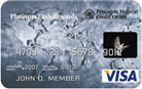 PenFed Platinum Cashback Rewards Card
Bonus categories appear and change regularly for this card, but not on a set schedule.
You can view all the eligible merchants. You don’t need to enroll. This is in addition to the year-round rewards structure of 5% cash back on gas purchases (must pay at pump) and 1% cash back on everything else. Rewards are credited monthly on your next statement.
Note: To get this card, you must also have membership to the Pentagon Federal Credit Union (you can apply for both at the same time). In general, membership is open to the military, US government employees, or the family or household of existing members. However, anyone can become eligible by joining the National Military Family Association (NMFA) for a $20 one-time fee. PenFed also offers other competitive financial products, including low-rate mortgages and long-term CD rates.
In order to keep track of all these, I usually just cut off the top part of a Post-It note with the sticky backing, and use it to label each card in my wallet. Here’s a pic of one of my cards:

 Perkstreet Financial is relatively new, but they’ve already tried a bunch of different ways to make their online checking account attractive, from sign-up bonuses to coffee awards. However, I think they’ve stumbled onto something with their new cashback debit card rewards structure that beats out any other online bank currently:

 Okay, so Ally does spend a lot of money on advertising, but a feature they rarely mention is actually the best reason to open an account with them. They only hit you with a early withdrawal penalty of 60-days of lost interest if you “break” a CD with them. The Ally Bank 5-year CD currently yields 1.60% APY (as of 10/25/13). Rates change constantly, but let’s assume you have a certificate of deposit from any bank paying 2.99% APY with an early withdrawal penalty of the last 60 days of interest. (2.99% APY ~= 2.95% rate compounded daily.) Here’s how your actual annualized interest rate would fluctuate given your holding period.
 I reviewed SmartyPig.com a while back when they had just broke onto the scene, but they have made a lot of improvements in response to customer feedback since then. You can think of them like an online piggy bank that helps you towards savings goals, but they’ve added so much flexibility that you can pretty much use them like any other savings account. The best part? They currently pay 2.15% APY on balances up to $50,000 (FDIC-insured). That’s better than any other savings account out there, with no additional requirements. No minimums, no maintenance fees.
 Sallie Mae is best known as the huge student loan originator and servicer. Their new Sallie Mae Bank is an FDIC-insured bank that offers a very competitive 1.40% APY in their online savings account. Not a bad deal to lend out money to captive students at high interest rates, and pay much less as a bank! Hopefully this means that they can keep their rates higher than other banks.
 The Best Credit Card Bonus Offers – 2026
 Big List of Free Stocks from Brokerage Apps
 Best Interest Rates on Cash - 2026
 Free Credit Scores x 3 + Free Credit Monitoring
 Best No Fee 0% APR Balance Transfer Offers
 Little-Known Cellular Data Plans That Can Save Big Money
 How To Haggle Your Cable or Direct TV Bill
 Big List of Free Consumer Data Reports (Credit, Rent, Work)