Early Retirement Portfolio Asset Allocation Update, April 2016

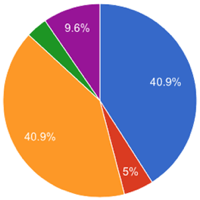
portpiegenericIt has been a while, so here is a 2016 First Quarter update on my investment portfolio holdings. This includes tax-deferred accounts like 401ks, IRAs, and taxable brokerage holdings, but excludes things like our primary home and cash reserves (emergency fund). The purpose of this portfolio is to create enough income to cover household expenses.
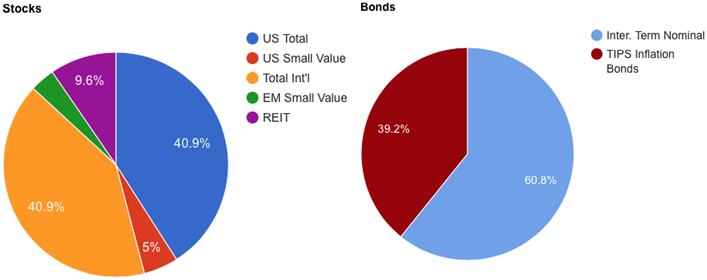
Target Asset Allocation

aa_updated2015

I try to pick asset classes that will provide long-term returns above inflation, distribute income via dividends and interest, and finally offer some historical tendencies to balance each other out. I don’t hold commodities futures or gold as they don’t provide any income and I don’t believe they’ll outpace inflation significantly. In addition, I have doubt that I would hold them through an extended period of underperformance (i.e. don’t buy what you don’t can’t stick with).

Our current target ratio is 70% stocks and 30% bonds within our investment strategy of buy, hold, and rebalance. With a self-directed portfolio of low-cost funds and low turnover, we minimize management fees, commissions, and tax drag.

Actual Asset Allocation and Holdings

1604_portpie

Stock Holdings
Vanguard Total Stock Market Fund (VTI, VTSMX, VTSAX)
Vanguard Total International Stock Market Fund (VXUS, VGTSX, VTIAX)
WisdomTree SmallCap Dividend ETF (DES)
WisdomTree Emerging Markets SmallCap Dividend ETF (DGS)
Vanguard REIT Index Fund (VNQ, VGSIX, VGSLX)

Bond Holdings
Vanguard Limited-Term Tax-Exempt Fund (VMLTX, VMLUX)
Vanguard Intermediate-Term Tax-Exempt Fund (VWITX, VWIUX)
Vanguard High-Yield Tax-Exempt Fund (VWAHX, VWALX)
Vanguard Inflation-Protected Securities Fund (VIPSX, VAIPX)
iShares Barclays TIPS Bond ETF (TIP)
Individual TIPS securities
U.S. Savings Bonds (Series I)

Commentary
In terms of the big picture, very little has changed. I did not accomplish my plan of relocating my holdings of WisdomTree SmallCap Dividend ETF (DES) and WisdomTree Emerging Markets SmallCap Dividend ETF (DGS) into tax-deferred accounts. I pretty much left them where they have been, inside a taxable brokerage account. I am currently leaning towards simply selling them completely and making my overall portfolio more simple. I would just have Total US, Total International, and US REITs for stocks. I would technically still hold a “small value tilt” on my holding in my kid’s 529 college saving plan asset allocation.

As for bonds, I’m still somewhat underweight in TIPS mostly due to lack of tax-deferred space as I really don’t want to hold them in a taxable account. (I noticed that shares of TIP are actually up 4% this year, less than 4 months in). My taxable bonds are split roughly evenly between the three Vanguard muni funds. The average duration across all of them is roughly 4-5 years.

A simple benchmark for my portfolio is 50% Vanguard LifeStrategy Growth Fund (VASGX) and 50% Vanguard LifeStrategy Moderate Growth Fund (VSMGX), one is 60/40 and one is 80/20 so it also works out to 70% stocks and 30% bonds. That benchmark would have a total return of -0.87% for 2015 and +1.42% YTD (as of 3/31/16).

I like tracking my dividend and interest income more than overall market movements. In a separate post, I will update the amount of income that I am deriving from this portfolio along with how that compares to my expenses.

Under Armour, Nike, and Owning The Haystack

haystacknikeIf you’re a basketball fan, you may have read this ESPN article about how Under Armour beat out Nike to get an endorsement deal for Stephen Curry. As one of the hottest athletes in the world, this single deal could shift billions of dollars towards Under Armour, especially if the Warriors win 73 games and defend their NBA championship. All for a company that just starting making shoes 10 years ago.

Under Armour (UA) is currently worth about $10 billion (at a very high P/E ratio), just 10% of Nike (NKE) at roughly $100 billion. What will things look like in another 10 or 20 years? Will they maintain their momentum? Athletic apparel is a huge and growing industry, but fashion moves quickly and I am only getting older! Under Armour didn’t even exist when I was begging my parents for Nike Air Jordans in high school.

I see myself as an investor in these companies through the Vanguard Total Stock Market Index Fund. I know that as a market-cap weighted fund, the amount of each stock held is directly proportional to the total market value of the company. Right now, I own roughly 10 shares of Nike stock to every 1 share of Under Armour stock. If the current trends continue, I could one day be owning 10 shares of UA stock for every share of NKE. All without having to pay attention to trends, comb through any financial statements, or trade a single share of stock.

In the future, I will own shares of the company selling whatever kinds of clothing and shoes all the kids covet, be it Nike or Under Armour or something being sketched right now in a garage somewhere. (My own athletic wear logos are dependent on what is on sale under $10 at Ross…) I’ve repeated this well-known quote from Vanguard founder Jack Bogle before:

Don’t look for the needle in the haystack. Buy the entire haystack.

In the end, I sleep better at night because I know that I will own the haystack. I will own all the winners in relative amounts. In exchange, I will give up the opportunity to earn a very high return from betting on the top winner, I will give up the risk of picking the losers, and I won’t have to pay anyone to pick them for me.

The New Financial Bundle: Checking + Savings + Credit Card + Brokerage + Retirement Advice

allytk

Last week, Ally Financial announced that they are acquiring TradeKing. What made this interesting was that they didn’t refer to TradeKing as a discount brokerage firm, but a “digital wealth management company”. This another move from independent start-up (TradeKing merged with Zecco earlier) to big, corporate “bundle”. The traditional communications bundle includes TV, home internet, home phone, cellular phone, and cellular data. The new financial bundle will include:

  • Checking account – Daily cash management, paycheck target, online bill payment, ATM access, debit cards.
  • Savings account – Liquid savings, higher interest rate.
  • Credit card – Easily-accessed credit line.
  • Self-directed brokerage account – DIY investments including individual stocks, options trading.
  • Professional portfolio management – Managed accounts including advice regarding asset allocation, taxes, retirement income, and more. Both lower-cost robo-advisor and higher-touch human advisor platforms.

Here’s my opinionated rundown on some of the bigger firms in this new area. Some of the “pros” aren’t that strong, and some of the “cons” aren’t that bad, but it helps organize my thoughts.

Ally Financial / TradeKing

  • Pros: Competitive interest rates on checking and savings, ATM fee reimbursements, $5 brokerage trades.
  • Cons: No physical branches. No credit cards (yet). Robo-advisor program is still relatively small and new.

Bank of America

  • Pros: Huge physical branch and in-house ATM footprint. Merrill Edge commission-free trades starting at $25k minimum asset balance, $6.95 trades otherwise. Credit card rewards bonus with minimum asset balance.
  • Cons: Low interest rates on banking products. Merrill Lynch advisor network is big and uses traditional fee system, so I’m not a huge fan but others may like it. No robo-advisor program (yet).

Fidelity

  • Pros: Decent cash management account with ATM fee reimbursements, selected commission-free ETFs, somewhat limited but low-cost index fund selection, $7.95 trades otherwise, 2% cash back credit card.
  • Cons: Low interest rates on banking products, human-based Portfolio Advice is relatively expensive and pushes expensive actively-managed funds. Lower-cost robo-advisor is probably coming soon, but yet released.

Schwab

  • Pros: Decent cash management account with ATM fee reimbursements, commission-free Schwab ETF trades with low-cost index options, $8.95 trades otherwise, 1.5% cash back American Express, low-cost robo-advisor via Intelligent Portfolios.
  • Cons: Low interest rates on banking products.

Vanguard

  • Pros: Large selection of low-cost funds and ETFs, commission-free Vanguard ETF trades for all, $7 non-Vanguard ETF/stock trades (or less based on asset level). Portfolio advice includes robo-component plus available human representative.
  • Cons: Limited availability and features on banking accounts. Limited portfolio support for buying non-Vanguard products. No credit cards.

I still believe that the self-directed investor is best off picking individual products a la carte, but it will be interesting to see how things change in the coming years. Each financial mega-institution will likely improve upon their weaknesses, and offer significant perks and discounts for keeping all your money with them.

New Rules on Fiduciary Duty for Retirement Account Advice

dol_logo

The Department of Labor has released their final rule on reducing conflicts of interest on retirement savings advice. As expected, the new rule now requires any person who provides investment advice on retirement accounts like 401(k) or IRAs to act as fiduciaries and put their client’s best interest first. The goals are to save investor money otherwise directed to hidden fees and commissions, while helping even the playing field for the financial advisors have been acting as fiduciaries all along.

Commentary. Lots of people have most of their retirement savings in 401k plans, which are often eventually rolled over into IRAs. There are entire firms of salespeople who try to capture this money and skim off huge commissions, and now they will have to act as fiduciaries.

While it can be touted as an overall “win” for consumers, there are still plenty of grey areas. The final rule requires firms to be compliant on several broader provisions by April 2017 and fully compliant by Jan. 1, 2018. Existing investments are grandfathered in. Small 401(k) plans are exempt from some of the rules. Firms can still technically sell you things like high fee variable and indexed annuities in IRAs and brokers can continue to recommend proprietary products, there just has to be a believable shred of reason behind it.

I’m going to be honest, I read about 20 articles on this subject and my head hurt with all the little details. This rule could have really blown up large parts of the industry, but you can tell they really tried not to disrupt anything significant. Try reading some for yourself:

Department of Labor Official Page
Department of Labor Press Release Fact Sheet
White House Fact Sheet [PDF]
NY Times 1, NY Times 2
WSJ 1, WSJ 2

In other words, the nastiest stuff with the highest hidden fees and commissions will probably go away. So it’s a win around the edges. For the savvy DIY investor or the person with their money with a trustworthy registered investment advisor (RIA) that was already a fiduciary, the effect will likely be small if anything.

Hopefully, if you decide to have someone help you manage your investments, they are already a fiduciary, have been for a while, and don’t need someone to tell them to act in your best interest.

Morningstar Individual Investor Conference 2016

mornconfMorningstar is holding a free online event this Saturday, April 2nd called the Individual Investor Conference. Starting at 9am Central, according the full agenda there will be six live streaming video sessions from their staff. You can chat with other attendees during the video stream, or also send in your own questions to miic@morningstar.com with the subject line “MIIC 2016: My Investing Question”. Here are the sessions that interest me:

10:00–10:50 a.m. CST “Securing Your Retirement: A Conversation with Christine Benz and Harold Evensky”

As pension plans wane and Social Security faces long-term cutbacks, more and more of individuals’ retirement security is in their own hands. How do they make it work? In this one-on-one interview, Morningstar director of personal finance Christine Benz and noted financial planner Harold Evensky (a pioneer of the “bucket approach” to retirement income) will discuss the key pillars to retirement security for individuals in every life stage–from early-career savers to those already in retirement.

1:30–2:20 p.m. CST “Portfolio Planning: Make a Lean, Mean, Tax-Efficient Machine”

Because we investors don’t know what headwinds will come, it makes sense to streamline everything else we can control–and that includes minimizing the drag caused by unnecessary tax exposure. In this presentation, Morningstar director of personal finance Christine Benz will help you craft a solid plan for tax efficiency–that means maximizing tax shelters, optimizing taxable portfolios, finding the best tax-smart investments, and building a tax-savvy retirement-drawdown plan.

It doesn’t look like are required to register or anything, just show up. These are relatively long sessions, so hopefully it will be a compilation of their “best stuff” on the given subjects.

Top 10 Financial Advisor Firms With Highest Misconduct Rate

misconduct0

There is a famous quote that Charlie Munger uses as an example of the inversion technique:

Tell me where I’m going to die, so I won’t go there.

Instead of focusing on things we should to help us, we can also simply avoid doing things that will hurt us. Don’t do drugs. Don’t gamble.

I can’t provide a clear roadmap to finding a great financial advisor. But after reading through the SSRN research paper The Market for Financial Adviser Misconduct mentioned yesterday, I certainly know what to avoid. Here’s my version of the Munger quote:

Tell me where I’m most likely to be mistreated financially, and I won’t put my money there.

These are the top 10 firms ranked according to the percentage of advisors who been disciplined for misconduct, as based on the FINRA BrokerCheck database. This list is restricted to firms with at least 1,000 advsiors.

  • 20% Oppenheimer & Co.
  • 18% First Allied Securities, Inc.
  • 15% Wells Fargo Advisors Financial Network, LLC
  • 15% UBS Financial Services
  • 14% Cetera Advisors, LLC
  • 14% Securities America, Inc.
  • 14% National Planning Corporation
  • 14% Raymond James & Associates, Inc.
  • 13% Stifel, Nicolaus & Company, Inc.
  • 13% Janney Montgomery Scott, LLC

Yes, you read that right, 1 in 5 advisors employed by Oppenheimer & Co have at least one misconduct-related disclosure in the their files. All of these firms above have incident rates roughly double that of the overall advisor population. Mix in the information we learned previously about the high likelihood of being repeat offenders, and it’s quite simple to avoid putting your hard-earned money anywhere near these firms.

Source screenshot:

misconduct1

They May Not All Be, But Your Financial Advisor Should Be a Fiduciary

dol_logoRight now, there is a big debate in Congress about whether the fiduciary standard should be required for all financial advisors that manage retirement accounts. A fiduciary requirement would include the following:

  • They must exercise best efforts to act in the best interests of the client.
  • They must provide disclosure of any conflicts of interest.
  • They must clearly explain how they make their money (upfront fees, asset-based fees, commissions, etc.)

Most people probably think “Wait, don’t they do this already”? Nope. Even so, many still violate the current lower standards! Barry Ritholtz has some scary numbers in his Bloomberg article Brokers Behaving Badly:

  • 1 in 13 brokers have committed misconduct that resulted in disciplinary action.
  • Half of those brokers are fired, but nearly half simply move on to work for another firm within a year.
  • About a third of brokers are repeat offenders (multiple events of misconduct).

(Use the FINRA Broker Check tool to look up regulatory actions, violations or complaints for a specific person or firm.)

The worst part is that much of the financial industry continues to fight against the fiduciary standard. Even popular “guru” Dave Ramsey opposes the fiduciary proposal, and has been called out on Twitter for it. They claim it will “limit middle-class access to financial advice”, which roughly translates in my mind to “if we can no longer suck huge 8% commissions from small accounts, then we might not bother anymore”.

I enjoy managing my own investments. I also believe that hiring a good financial advisor would work well for many people. A “good” financial advisor needs to have hard knowledge, soft communication skills, and the proper alignment of interests.

Whoever wins this political fight, you as an individual still have the right to demand that your financial advisor be a fiduciary. Those letters after people’s name don’t all have the same value. Certain designations like Registered Investment Advisor (RIA) include a fiduciary standard component. You may also show them this Fiduciary Pledge and see how they respond. Being a fiduciary alone is not enough to find an appropriate advisor, but it does serve as a very simple and basic filter.

Index Funds vs. Hedge Funds: Buffett $1,000,000 Bet Update 2016

chips

We are now 8 years in on the 10-year bet between Warren Buffett and a successful hedge fund manager. In 2007, Warren Buffett challenged any hedge fund to a long-term bet against the S&P 500. He found a taker.

Fortune magazine announced “Buffett’s Big Bet”, where $1,000,000 would go to the charity chosen by the winner. The bet would run from 2008 to 2018. Buffett would take the S&P 500, represented by the Vanguard S&P 500 index fund (Admiral shares). Protégé Partners would stand behind hedge funds, represented by the average return of five hand-picked hedge funds.

Carol Loomis has just posted the 2016 update in Fortune. The hedge funds made up a little bit of ground in 2015, but overall still lag significantly:

  • Last year (2015) the S&P 500 index fund went up 1.36%, but the hedge funds went up 1.7%.
  • Since inception (2008 through 2015), the S&P 500 index fund is up 66%. The hedge funds went up 22%. The performance gap is over 40%.

Here are the historical annual breakdowns:

protege2016

An important aspect of this bet is that we are comparing performance after fees. Hedge funds may employ some bright minds but also charge hefty fees of roughly 2% of assets annually + 20% of any gains. That is like running into a heavy and persistent headwind. Meanwhile, the Admiral shares of the Vanguard 500 Index Fund charge only a flat 0.05% annually.

Another important lesson that it is easy to point on good performance in retrospect. It is MUCH harder to pick out winning managers ahead of time (and harder on those managers when everyone is looking and there is too much money to deploy). At the start of the bet, the past performance of the hedge funds were excellent – from inception in July 2002 through the end of 2007, the Protégé fund gained 95% (after all fees), soundly beating the Vanguard S&P 500 index fund’s 64%.

Finally, my last point is that it is hard to know when to drop a winning strategy gone sour. The handpicked hedge funds have some serious catching up to do. But there are two years left in the bet, so technically it is still anyone’s game. If you were invested in these hedge funds, would you stick it out or cut your losses?

Read the full terms of the bet and each side’s opening arguments at LongBets.org. See my original 2008 blog post and halfway 5-year update here.

Vanguard Target Date Retirement Funds: Embrace Your Inner Ronco Rotisserie Oven!

ronco200b

I’m a fan of the Vanguard Target Retirement 20XX Funds. These Target Date Funds (TDFs) may not be perfect, but they are a low-cost, broadly-diversified, “set-it-and-forget-it” fund that I feel are consistently under-appreciated and easily maligned due to their inherent “one-size-fits-most” nature.

In a recent Vanguard blog post titled “TDF investors are not rotisserie ovens”, senior product manager John Croke felt the “set it and forget it” description “fuels the misperception that many investors in TDF strategies are disengaged, disinterested, and generally unaware of what they’re invested in.”

The subsequent points he makes are certainly valid, but I happen to think the rotisserie oven analogy should be worn as a badge of honor! As Jason Zweig writes in the WSJ article “Radical Investing Advice: Do Nothing, Nada, Zilch, Zippo”:

Target-date investors, says Jeff Holt, an analyst at Morningstar, “are less prone to take matters into their own hands and move their assets around when markets are gyrating.”

[…] research by Financial Engines found that participants with little or no money in target-date funds underperform them by an average of 2.1 percentage points annually.

You won’t see Vanguard Target Retirement funds being touted very much in the financial media. Their returns are rarely at the top since they are index-based, so magazines and newsletters won’t write about them. Most advisors are supposedly charging you for their “expert” advice, so they will of course recommend something more complicated. Even index fund enthusiasts like myself often don’t invest in them because we like to fine-tune and tinker (sometimes to our detriment). They never seem to be the “best” move, just something you settle for when you can’t think of anything better. I think this cartoon describes the situation well (found via @michaelbatnick):

ronco_truth

It is an unpleasant truth that most people would be better off just focusing their energy on savings rate and leaving the investing to a Vanguard Target Retirement Fund. Another example of the power of inaction: A person who bought the 30 largest US companies back in 1935 and did absolutely nothing after that would have outperformed the S&P 500 over the last 40 years.

Now, I should throw in a few quick points from the Vanguard blog post about what investors shouldn’t forget about:

  • TDFs will continue to hold a certain amount of stock risk after you reach your target retirement age.
  • Along the same lines, TDFs do not provide guaranteed income in retirement.

To summarize, don’t be insulted when being compared to a Ronco rotisserie oven. Be proud to “Set it and forget it”. Vanguard Target Retirement Funds even perform the chore of rebalancing between stocks and bonds for you automatically. Perhaps Vanguard could even use some tips from Ron Popeil about marketing their low, low pricing 😉

Making Your Nest Egg Last: Safe Withdrawal Rates vs. Sustainable Withdrawal Rates

eggosReading Warren Buffett’s Annual Letter always reminds me that stocks are not just some numbers that bop up and down, but are shares of real businesses with land, factories, knowledge, and hard-working people. This helps reassure me that the value of those companies taken together will never go to zero, and will eventually rebound and grow over the long term. At the same time, once you stop working and start selling shares, the prospect of going to zero is real. If you combine a prolonged bear market and forced withdrawals at depressed prices, you risk permanently impairing your portfolio.

According to a Merrill Lynch survey of wealthy families with $5+ million (not just people on the street!), 39% of them thought you could spend 6% or more from your portfolio indefinitely. The reality is closer to 3%.

When you see the term safe withdrawal rate, it almost always refers to how much money you can safely withdraw from an investment portfolio each year without running out of money. Usually, this number is set during the first year, and is adjusted annually for inflation. The key phrase is “without running out of money”. You could start out with a $800,000 dollars, but as long as you end with at least $1 and never drop below zero, you’re considered “safe”. In the real world, having your portfolio nosedive while you’re still relatively young may cause you to panic prematurely.

pc_panic

Since I last mentioned PortfolioCharts.com, the creator Tyler has released a new tool called the Withdrawal Rates Calculator. It is quite cool, at least for an asset allocation geek like myself. You can enter your own custom asset allocation, and it will show both the historical safe withdrawal rate and the sustainable withdrawal rate. As defined there, a sustainable withdrawal rate is one where you must end the period with your initial principal amount, for example you must both start and end with $800,000 dollars.

Here are the results for the Classic 60/40 portfolio:

60% Total US Stock Market
40% Total US Bond Market

pc_6040

Here are the results for the Swensen Portfolio, on which my portfolio is loosely based:

30% Total US Stock Market
15% International Developed
5% Emerging Markets
15% 5 Year US Treasuries
15% US TIPS
20% US REIT

pc_swensen

For the Classic 60/40 portfolio, the rough numbers for a 40-year period are 4% for Safe WR and 3.4% for Sustainable WR. For the Swensen portfolio, the rough numbers for a 40-year period are 4.6% for Safe WR and 4.2% for Sustainable WR. If you were to focus on the sustainable numbers, that’s a surprising result of 24% higher withdrawals with the Swensen portfolio (and other asset allocations do even better!)

Can you depend on these historical differences to persist into the future? I would be careful about looking at things too finely, as correlations are always shifting. However, I do prefer using the sustainable withdrawal rate number for my own early retirement planning, and I am thankful to have this tool to tinker with.

(You may also be interested to know that a 100% US stock portfolio, despite its higher historical average returns, has a slightly lower 30-year sustainable withdrawal rate that either of the options above.)

Real World IRA Asset Allocations vs. “Age in Bonds”

As a follow-up to my last post on 100% stocks forever, the referenced NYT article had some neat data that I hadn’t seen anywhere else. This chart shows how the overall asset allocation of IRAs held by Vanguard change according to the age of the investor. The glide path of Vanguard Target Retirement mutual funds is also included for comparison.

nyt_100stocks_glide

Eyeballing things, it appears that past age 65, Traditional IRAs settle at roughly 58% stocks, while Roth IRAs settle at roughly 67% stocks. This “real world glide path” declines much more gradually than ones from the major all-in-one fund providers, and also stays flat from retirement age onward. For comparison, here are additional glide paths for Fidelity, T. Rowe Price, Blackrock, and American Century, taken from a Morningstar paper. (For this chart, retirement age would be roughly 2015.)

target1_full

I don’t know any studies that have found the real reason behind the “real world” numbers. I would suggest as a possible explanation that the average percentage must be asset-weighted, and “rich” people have more assets in aggregate. The “rich” don’t need to make big withdrawals (unless required by law), and so they don’t need to spend every penny before they die. They will leave a chunk of money to heirs and thus have a long time horizon. In turn, this longer time horizon would support the holding of more stocks. Roth IRAs are especially useful as an inheritance vehicle as they don’t have required minimum distributions (RMDs), which could also explain why they are even more strongly weighted in stocks.

Meanwhile, if you need to spend down your assets during retirement, then the asset allocation suggested by Vanguard Target Retirement funds (and all the other major target-date funds) would make more sense. But it’s certainly a good point that these one-size-for-all solutions will not apply to everyone.

If you like low costs, diversification, and simplicity but want more control, I would suggest the option of switching to a Vanguard LifeStrategy all-in-one fund that stays fixed at 40%, 60% or 80% stocks. I use the 60/40 LifeStrategy Moderate Growth Fund (VSMGX) as a benchmark for my own long-term portfolio asset allocation.

Best Asset Allocation Plan: 100% Stocks, Forever?

The NY Times had a provocative two-part series on portfolio asset allocation by David A. Levine, former chief economist at Sanford C. Bernstein & Company:

I enjoyed reading his opinions, but didn’t agree with all of his points. The heart of my argument is that when the writer says “most people”, he seems to be talking about his Wall Street peers with multi-million dollar retirement portfolios, where most of it will eventually be passed onto heirs or charity. Instead, “most people” are actually trying to make something like a $200,000 nest egg last as long as it possibly can.

Time horizon vs. asset size. The first article brings up the topic of “time horizon”:

This consensus view, though, rests on a fallacy: the belief that as people grow older, their investment horizon shortens and, therefore, their ability to withstand volatility diminishes considerably.

I would argue, instead, that there is an insufficient appreciation of just how apt the metaphor of the “investment horizon” is. Just as a sailor sees but never reaches the horizon, the same is true for nearly all investors.

[…] But what if there’s a bear market? “No big deal,” I say. As long as you don’t panic and sell most of your holdings at the worst times, your annual withdrawals are limited. As a result, you should not really worry about fluctuations in the stock market.

A rule of thumb is that stocks can drop 50% in any given year. Again, let say all you have is $200,000 and you’re withdrawing 4% of that ($670 a month) to supplement your Social Security and/or pension income. If your balance drops to $100,000 due to a economic crisis, and you still need that $670 a month to pay the bills, yes you are going to panic.

If you have a $10 million portfolio, and a market crash means that you simply reign in some of your discretionary purchases, then your stress level is going to be lower. As my own portfolio has grown, I now only hold 70% stocks but also worry less about the stock portion as I know can ride out a bad sequence of returns.

As Josh Brown reports on The Reformed Broker:

Having worked directly and indirectly with investors from all walks of life and every region of the country over the last 18 years, I can promise you that almost no one can endure – emotionally speaking – the volatility and drawdowns that an all-equity portfolio brings to the table.

Long-term performance vs. asset allocation. The second article makes the point that the historical long-term performance of stocks has been higher than all types of bonds, over many different holding periods:

nyt_100stocks_bonds

In my opinion, the logical conclusion from such tables as above is limited to saying that if you are going to invest in stocks, you need to hold them for 20+ years. So if your portfolio is 60% stocks, keep that portion in stocks for 20+ years. The table doesn’t take into account withdrawals or timing risks where you are forced to take out money to meet spending needs during a period of negative returns.

In addition, Warren Buffett is used as an example because he stipulated 90% S&P 500 stocks and 10% Treasury Bills for his wife’s trust upon his passing. Buffett is worried about the long-term returns, not the risk of his wife running out of money. Do you think her withdrawal rate will be anywhere near 4%? It’s going to be a tiny fraction of 1%. I’d bet big bucks that Buffett would not have set the same asset allocation if she only had $500,000 to live on.

In the end, I guess what I am saying is that your asset allocation also depends on your asset size. Your time horizon matters, but also how close you are to missing a rent payment matters too. Products like target-date retirement funds don’t adjust based on if your balance is $10 million or $10,000. Nor should they really, as they don’t know your future spending needs either. Investors themselves (or their advisors) need to take both of these factors into account.

Of course, it would be great not to have to worry about keeping a balance greater than zero. With a big asset base and modest spending levels, you could indeed have an indefinite time horizon and keep 60% in stocks forever, much like a traditional pension plan. I’d require some enormous amount like $10+ million to be 100% stocks forever, though.