The WSJ article Why Target-Date Funds Might Be Inappropriate for Most Investors (free gift article) discusses new research using “deep learning” artificial intelligence to find the optimal asset allocation over time. There are several interesting insights that also agree with common sense. For example, one size doesn’t fit all. Wealthier investors can withstand the volatility from holding a much higher stock allocation, whereas lower net worth investors need to be more conservative to avoid a hitting zero due to a bad sequence of returns.
Here is how the optimal glide path for the average investor differs between Deep Learning analysis vs. actual Target Date Funds:

Though the primary insight of this modeling is that one size doesn’t fit all, the research did reach one conclusion that does apply to all of us on average: The typical glide path used by target-date funds is too conservative starting at the age of 50. In contrast to an equity exposure level that drops to 50% by retirement age and to as low as 30% during retirement, the average recommended equity exposure in the researchers’ model never falls below 60%.
While I don’t know the details regarding the underlying assumptions of this research, the red AI line caught my eye because I also don’t plan on going below about 60% stocks ever in my lifetime. My reasoning is that I am going for a “perpetual withdrawal rate” scenario where my I just live off a base of growing dividends and interest. (I’m not talking about owning only extreme high-yield products like closed-end ETFs, junk bonds, and leveraged REITs). After reaching the “safe withdrawal rate” number that is based on a very high likelihood of not dying with zero, I wanted even more margin of safety. It can be counterintuitive, but over the long run owning businesses can be “safer” than just own a big bag of cash that is constantly exposed to inflation risk.
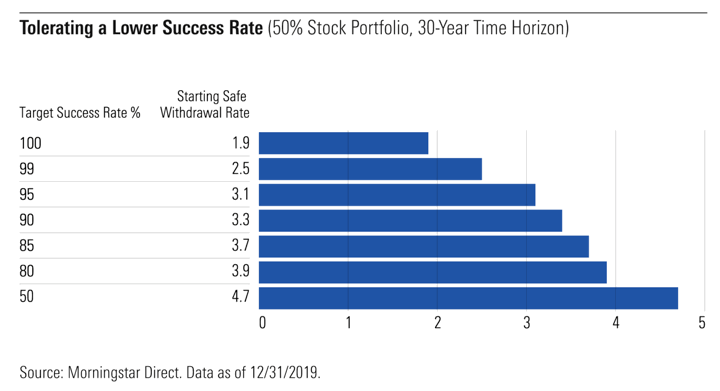
 One of the perpetual debates in retirement planning circles is withdrawal rates, AKA how much monthly income can you take from a portfolio. Once you nail down a withdrawal rate and retirement spending target, then you get Your Number – how much you need to have saved to retire (after backing out Social Security and other income streams). It’s common to start with the static 4% rule, but that rule also includes some drawbacks. An alternative is a flexible withdrawal rule that adjusts based on market returns. When your portfolio grows, you can spend a little more. If it shrinks, you cut back a little. Sounds reasonable, right?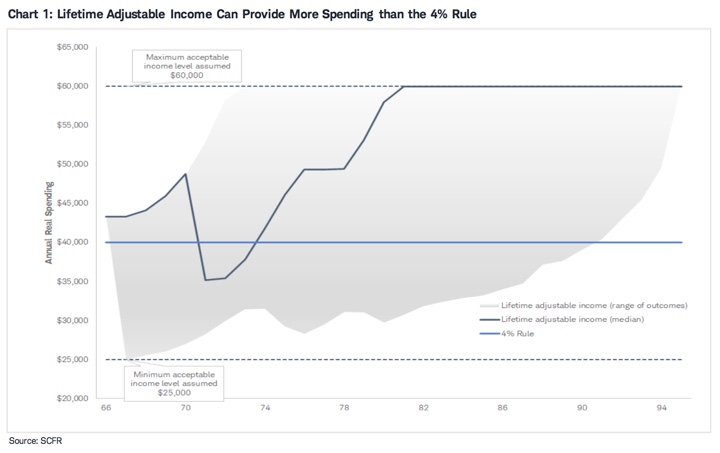

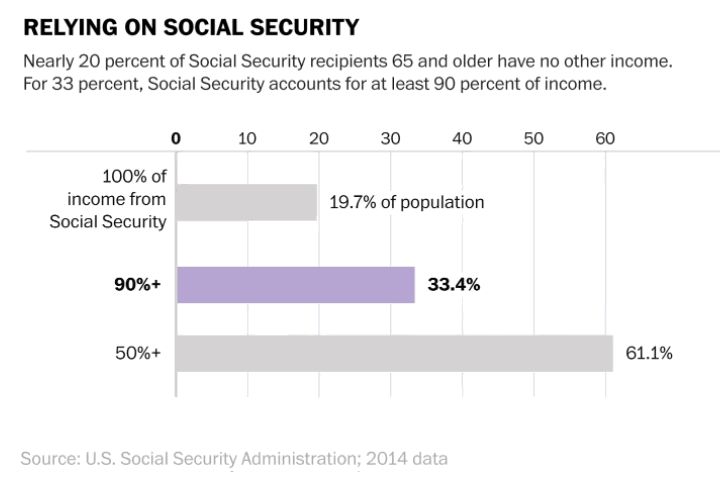
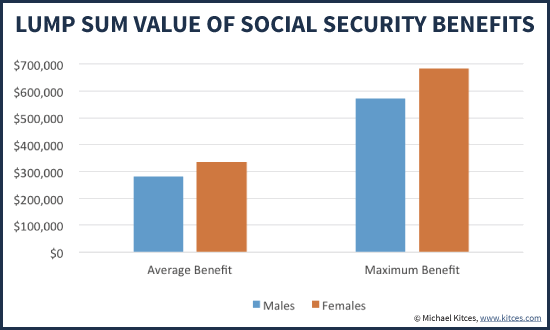

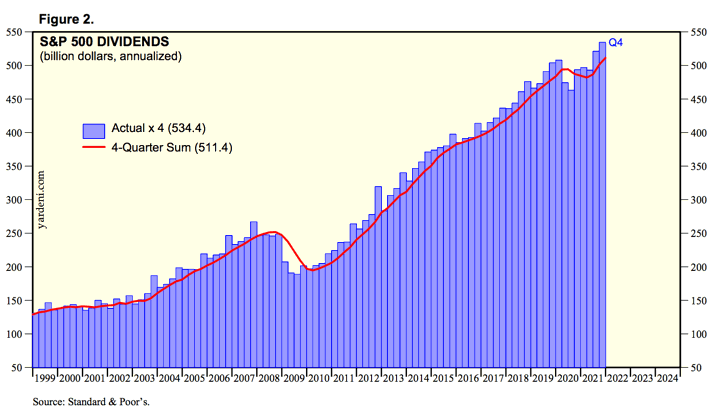
 Here’s my (late) quarterly update on the income produced by my “

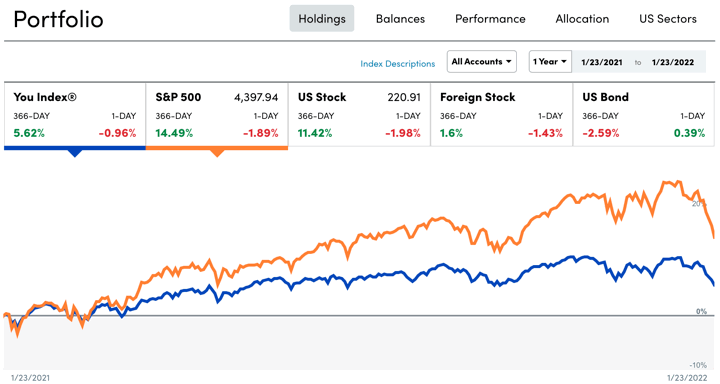
 Here’s my (late) quarterly update on my current investment holdings, as of 1/23/22, including our 401k/403b/IRAs and taxable brokerage accounts but excluding a side portfolio of self-directed investments. Following the concept of
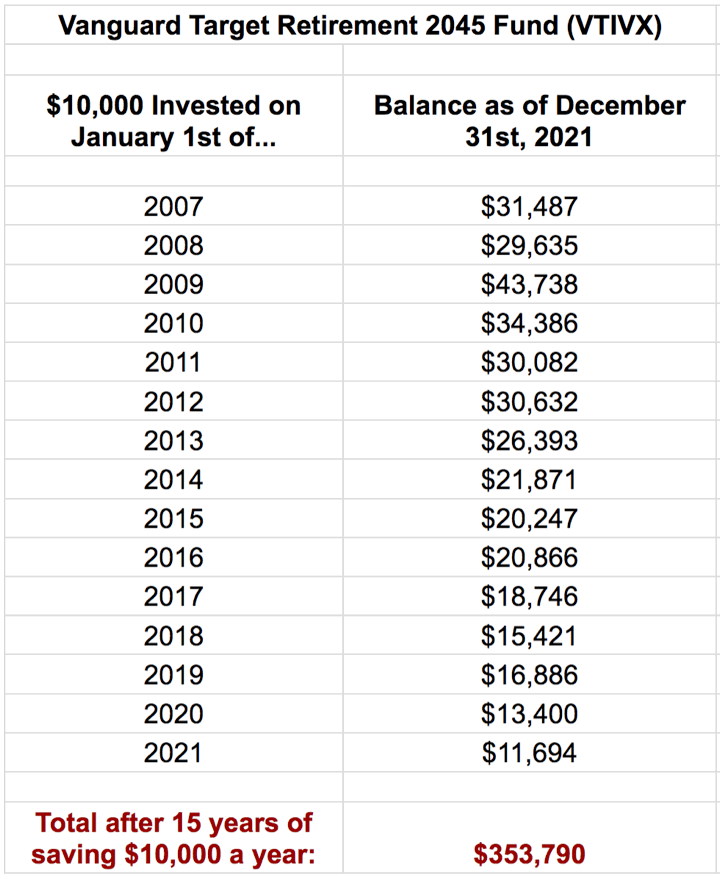
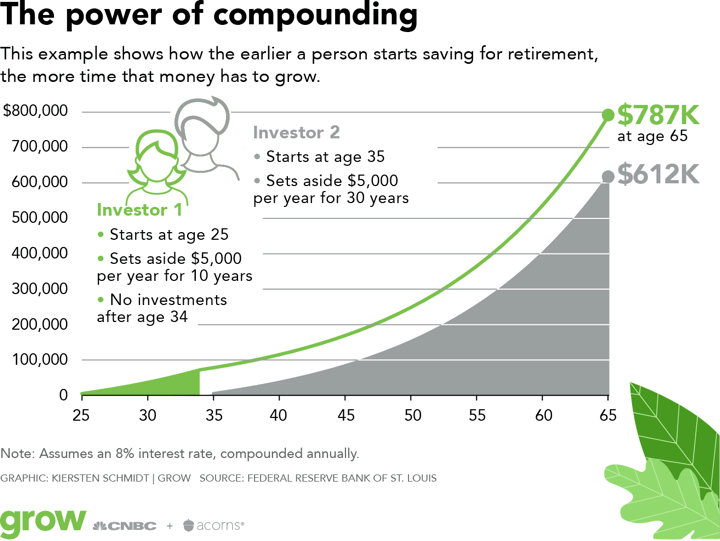
 Instead of focusing on the current hot thing, how about stepping back and taking the longer view? How would a steady investor have done over the last decade? Most successful savers invest money each year over a long period of time.
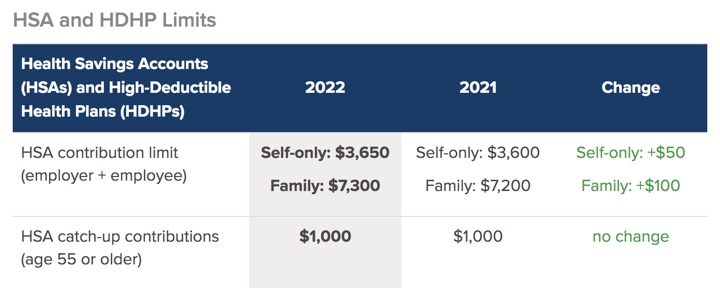
 The beginning of the year is a good time to check on the new annual contribution limits to the various available retirement accounts. Our income has been quite variable these last few years, so I regularly adjust the paycheck deferral percentages based on expected income for the year. This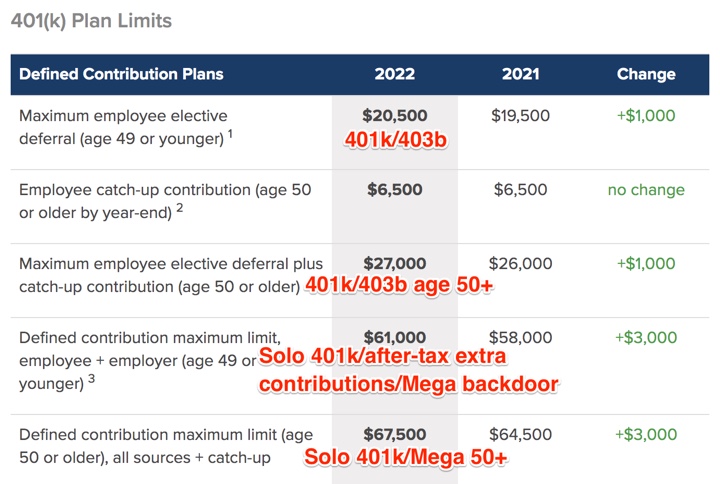
 The Vanguard Target Retirement Funds are one of the largest “set-and-forget” mutual funds that own a mix of stocks and bonds that automatically adjust over time based on your targeted retirement year, with combined assets across the institutional and retail classes of over $600 billion.


 Financial freedom seekers usually have a Number – the value at which their investments can support their spending indefinitely. This is directly linked to “safe withdrawal rates”. For example a 4% safe withdrawal rate is a 25x multiplier – meaning $30,000 in spending needs not covered by Social Security, annuities, or pensions would require 25 x $30,000 = $750,000. Morningstar recently released a 59-page research paper called


 Some investors like to break down their portfolio into several different asset and sub-asset classes. One long-standing example of the “slice-and-dice” is the “
 Savings I Bonds are a unique, low-risk investment backed by the US Treasury that pay out a variable interest rate linked to inflation. With a holding period from 12 months to 30 years, you could own them as an alternative to bank certificates of deposit (they are liquid after 12 months) or bonds in your portfolio.
  The Best Credit Card Bonus Offers – 2026
 Big List of Free Stocks from Brokerage Apps
 Best Interest Rates on Cash - 2026
 Free Credit Scores x 3 + Free Credit Monitoring
 Best No Fee 0% APR Balance Transfer Offers
 Little-Known Cellular Data Plans That Can Save Big Money
 How To Haggle Your Cable or Direct TV Bill
 Big List of Free Consumer Data Reports (Credit, Rent, Work)