Fidelity Investments Incoming Brokerage Asset Transfer Review

In order to use Fidelity’s Fully Paid Stock Lending Program, I decided to transfer some of my individual stock holdings from Merrill Edge to Fidelity. I was pleasantly surprised by the smooth experience, and here is a quick review of the process.

  1. 12/1 Wednesday. I started the transfer process online at Fidelity and read about my options. I knew that I only wanted to transfer certain tickers, and was told I needed a statement from my current broker dated within the last 90 days. The process was estimated to take a week. I slept on the decision.
  2. 12/2 Thursday. I went through their online Q&A process, which required me to enter online the ticker symbols of all the specific shares that I wanted to transfer. Fidelity then entered this information neatly into their asset transfer form. I simply had to print it out, sign it, scan it into a PDF, and then upload it again. I also uploaded a PDF statement from Merrill Edge. I officially submitted the transfer request.
  3. 12/6 Monday. I noticed early in the day that my shares were removed from my Merrill Edge account. The securities didn’t show up online at Fidelity yet.
  4. 12/7 Tuesday. I received an email from Fidelity notifying me “Transfer of Assets Request Completed”. The shares showed up online at Fidelity as well.
  5. 12/8 Wednesday. I am waiting on the cost basis information to arrive, they said it may take up to 15 additional days.
  6. 12/9 Thursday. Cost basis information showed up online.

Here is the text of the final e-mail:

Congratulations. Your transfer of assets has been completed successfully.

It may take up to 15 days for your firm to provide cost basis information. We will update your account when this information is received. If cost basis information is not provided by your firm, or if your firm identified any assets as non-covered, you can provide this information yourself on the Positions/Cost Basis page within your Portfolio Summary.

Their status tracker page is detailed and informative. (It also confirmed all my of tickers and share amounts, which are not shown below.)

Fees. I could not find any official page regarding transfer fee rebates from Fidelity, but anecdotally if you call them up after completing a transfer, Fidelity may reimburse you any account transfer fees. Transfer fees usually run about $75, so perhaps they decide unofficially based on the amount of assets transferred. Thankfully, Merrill Edge does not charge a fee for outgoing partial account transfers, so there was nothing to reimburse. As far as I know, Fidelity is not offering any transfer bonuses at this time.

Bottom line. The process to transfer some stocks from Merrill Edge to Fidelity took less than a week and was completed 100% online. No phone calls, no follow-up emails, no signature guarantees to track down. I credit good service from both Fidelity and Merrill Edge (where I am still keeping enough assets to qualify for the Platinum Honors tier of their Preferred Rewards program.)

Loan Out Your Stocks For Extra Interest? Fully Paid Lending Income Programs

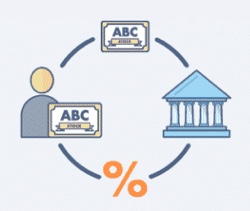
A few readers asked about “fully paid lending programs” offered by some brokerage firms. The premise is very intriguing: You lend out the stock shares you own and earn interest, all while keeping full “economic” ownership. You still get any upside or downside, you can still sell at any time, and your loans are backed by 100%+ collateral at a custodial bank. The broker finds borrowers, collects interest, and splits it with you (usually 50/50). Is this zero-effort free money? These programs can go by various names:
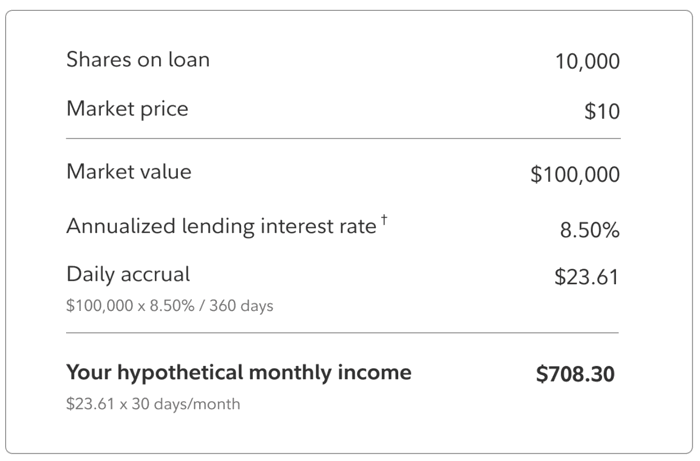
From Fidelity, here is a hypothetical example of how interest is calculated using an annualized lending rate of 8.50%.

Are the interest rates really that high? Fintel.io publishes “Short Borrow Fee Rates”, which they define as “the interest rate that must be paid by a short seller of [stock] to the lender of that security.” At the time of this writing, that fee was 0.25% APR for Tesla (TSLA) stock and 0.48% APR for Gamestop (GME) stock. That’s a far cry from 8.5%.

Still, if you have a large portfolio of stocks, even earning 0.10% in annual interest can become significant if it involves no extra effort.

Important factors to consider. After researching and comparing the details for each of these programs, here’s what I found.

  • Understand the mechanics of this collateralized loan. Shares on loan are not covered under Securities Investor Protection Corporation (SIPC). Counterparty default is thus a risk, and this is why the SEC requires that the broker provides collateral at a minimum of 100% of the loan value to be held at a third-party custodian bank. If the broker can’t pay, then you can request the collateral. Still, it could be a potential headache if the broker doesn’t follow the rules properly, as warned by this SEC letter.
  • You will get paid cash instead of your usual dividend payments while your security is on loan, and those two things may be taxed differently. Loan proceeds are usually taxed at your marginal tax rate (treated as ordinary income). Oftentimes, qualified dividends are taxed at a lower rate than ordinary income rates. Some brokers adjust for this difference, while many do not.
    It is possible you might lose more money due to these tax differences than gained through lending income.
  • Eligibility requirements vary by broker. For example, TD Ameritrade doesn’t allow margin accounts so you’ll have to downgrade to a cash account first. This may affect your ability to trade immediately with unsettled funds. Meanwhile, Fidelity requires a minimum account value of $25,000.
  • Participation doesn’t guarantee that your shares will be borrowed. Typically, securities that do get borrowed are in high demand or limited supply. Usually, they are used to facilitate short sales.
  • Interest rates paid vary. Don’t get too excited by the interest rates quoted in their hypothetical examples. It’s unlikely you’ll be earning a 8% rate for an entire year.
  • You give up proxy voting rights while your security is on loan.

I’ve never participated in such a program, but I have decided to try out the Fidelity Fully Paid Lending Program. I chose Fidelity for the following reasons:

Minimal counterparty risk. I view Fidelity as one of the most stable and reputable brokers, which means they are the least likely to have any issue paying back these loans. In addition, they have so much other business in high-compliance areas (401k plans, etc) that I trust that they will actually put up the proper collateral. Fidelity doesn’t need to take undue risks and is used to sweating the details.

Fully adjusting lost dividend income for taxes. Fidelity not only pays you any dividend income you miss due to them borrowing your stock, they adjust their payment higher to cover the maximum in potential taxes (26.98%). Perhaps another broker does this, but I didn’t see it spelled out explicitly and transparently like Fidelity. Otherwise, I might lose more money due to taxes than gained through lending income.

In order to mitigate the impact of cash-in-lieu payments to taxable accounts, Fidelity may return shares prior to a dividend record date. To help offset the potential tax burden associated with the receipt of cash-in-lieu payments in place of qualified dividends (as defined in the Jobs and Growth Tax Relief Reconciliation Act of 2003), Fidelity will credit participating taxable accounts with an additional credit adjustment equal to 26.98% of the qualified portion of the distribution. This adjustment will occur annually after all reclassification information is made available.4

Unfortunately, Merrill Edge and Vanguard do not seem to have such programs. I am currently in the process of transferring some securities into my Fidelity account to meet the minimum threshold.

If you have any experiences with these fully paid lending programs (good or bad) with any broker, please feel free to share in the comments. It’s been hard to find “real world” numbers on how much interest income to expect on a basket of mixed stocks.

Update: I posted an update on my real-world Fidelity securities lending income. Spoiler alert: The income has been miniscule.

Coursera: Free Online Courses on Accounting and Finance

One of my newer interests is better understanding individual businesses and how they work. Accounting is the “language of business” used to write annual reports, 10-Ks, 10-Qs, income statements, and so on. I was afraid a textbook would be too boring, so I am auditing the online Coursera course Financial Accounting Fundamentals by Professor Lynch of the University of Virginia. Here’s a quick summary of what is covered in the course:

Accounting is often called the language of business. It is this language that organizations use to communicate their economic performance to others. In this course, you will acquire the tools that you need to understand the fundamentals of accounting, the language of business.

You will learn to record business transactions in the company’s accounts, understand how they flow into the financial statements, and learn to draw basic conclusions about an organization’s financial health from the three most commonly used financial statements, the balance sheet, the income statement and the statement of cash flow. Are you ready? Then let’s go!

Auditing is completely free and lets you view all the materials and take “practice” quizzes, but you can’t take the “real” quizzes needed to earn the “shareable certificate” (which is fine with me as this is just for personal improvement and not future employment). The course assumes no prior knowledge, requires a commitment of roughly 2-3 hours per week, and lasts for 5 weeks. I finished the first week in about an hour and a half by watching videos at 1.25x speed. So far, I’ve enjoyed filling in the gaps in my knowledge.

This course is the first of a 4-part series by UVA called Entrepreneurship: Growing Your Business:

Welcome to Entrepreneurship: Growing Your Business, a new specialization from the Darden School of Business, University of Virginia. This Specialization was designed to give you the real-world tools and processes you will need to take your business from idea, to action, to growth and revenue. You’ll learn how to create budgets and read financial statements, how to lead with values, how to leverage new business models for growth and how to create new business innovations. Ideal for entrepreneurs, small business owners, and those who have a business plan but aren’t sure what to do next, Entrepreneurship: Growing Your Business will help you on the path to success for you, your business and society.

There are a few similar Coursera courses from UPenn Wharton and the University of Illinois.

I used to feel that I didn’t need to know any of this stuff (just buy a Target Date fund and work on your career, etc), but now I want to compound knowledge in this area as well. I’ll be able to use it for the rest of my life as a private investor living off of my portfolio. This is also related to working for yourself for an hour each day.

Best Interest Rates on Cash – December 2021 Update

via GIPHY

Here’s my monthly roundup of the best interest rates on cash as of December 2021, roughly sorted from shortest to longest maturities. Significant changes since last month: Not much… NASA FCU has updated their CD specials, and I finished buying up to the individual limits on the 7% Savings I Bonds for both of us. T-Bills, money market funds, and ETFs are still a pass.

I look for lesser-known opportunities earning more than most “high-yield” savings accounts and money market funds while still keeping your principal FDIC-insured or equivalent. Check out my Ultimate Rate-Chaser Calculator to see how much extra interest you’d earn by moving money between accounts. Rates listed are available to everyone nationwide. Rates checked as of 12/5/2021.

Fintech accounts
Available only to individual investors, fintech companies often pay higher-than-market rates in order to achieve fast short-term growth (often using venture capital). “Fintech” is usually a software layer on top of a partner bank’s FDIC insurance. Read about the types of due diligences you should do whenever opening a new bank account.

  • 3% APY on up to $100,000. The top rate is still 3% APY for October through December 2021 (can be 3.5% APY with their credit card), and they have not indicated any upcoming rate drop. HM Bradley requires a recurring direct deposit every month and a savings rate of at least 20%. Due to high demand, you must currently use a referral link to join. If you have any available to share (you only get 3), thanks to those who have dropped theirs in the comments of my HM Bradley review.
  • 3% APY on 10% of direct deposits + 1% APY on $25,000. One Finance lets you earn 3% APY on “auto-save” deposits (up to 10% of your direct deposit, up to $1,000 per month). Separately, they also pay 1% APY on up to another $25,000 with direct deposit. New customer $50 bonus via referral. See my One Finance review.
  • 3% APY on up to $15,000. Porte requires a one-time direct deposit of $1,000+ to open a savings account. New customer $50 bonus via referral. Important note: Porte is adding additional restrictions including minimum monthly transactions in January 2022. See my Porte review.
  • 1.20% APY on up to $50,000. You must maintain a $500 direct deposit each month for this balance cap, otherwise you’ll still earn 1.20% on up to $5,000. See my OnJuno review.

High-yield savings accounts
Since the huge megabanks pay essentially no interest, I think every should have a separate, no-fee online savings account to accompany your existing checking account. The interest rates on savings accounts can drop at any time, so I list the top rates as well as competitive rates from banks with a history of competitive rates. Some banks will bait you with a temporary top rate and then lower the rates in the hopes that you are too lazy to leave.

  • T-Mobile Money is still at 1.00% APY with no minimum balance requirements. The main focus is on the 4% APY on your first $3,000 of balances as a qualifying T-mobile customer plus other hoops, but the lesser-known fact is that the 1% APY is available for everyone. Thanks to the readers who helped me understand this. Unfortunately, some readers have reported their applications being denied.
  • Evangelical Christian Credit Union (ECCU) is offering new members 1.01% APY on up to $25,000 when you bundle a High-Yield Money Market Account & Basic Checking. (Existing members can get 0.75% APY.) To join this credit union, you must attest to their statement of faith.
  • There are several other established high-yield savings accounts at closer to 0.50% APY. Marcus by Goldman Sachs is on that list, and if you open a new account with a Marcus referral link (that’s mine), they will give you and the referrer a 1.00% APY for your first 3 months (a 0.50% boost). You can then extend this by referring others to the same offer.

Short-term guaranteed rates (1 year and under)
A common question is what to do with a big pile of cash that you’re waiting to deploy shortly (plan to buy a house soon, just sold your house, just sold your business, legal settlement, inheritance). My usual advice is to keep things simple and take your time. If not a savings account, then put it in a flexible short-term CD under the FDIC limits until you have a plan.

  • No Penalty CDs offer a fixed interest rate that can never go down, but you can still take out your money (once) without any fees if you want to use it elsewhere. CFG Bank has a 13-month No Penalty CD at 0.62% APY with a $500 minimum deposit. Ally Bank has a 11-month No Penalty CD at 0.50% APY for all balance tiers. Marcus has a 7-month No Penalty CD at 0.45% APY with a $500 minimum deposit. You may wish to open multiple CDs in smaller increments for more flexibility.
  • Lafayette Federal Credit Union has a 1-year CD at 0.80% APY ($500 min). Early withdrawal penalty is 6 months of interest. Anyone can join this credit union via partner organization ($10 one-time fee).

Money market mutual funds + Ultra-short bond ETFs
Many brokerage firms that pay out very little interest on their default cash sweep funds (and keep the difference for themselves). Unfortunately, money market fund rates are very low across the board right now. Ultra-short bond funds are another possible alternative, but they are NOT FDIC-insured and may experience short-term losses at times. These numbers are just for reference, not a recommendation.

  • The default sweep option is the Vanguard Federal Money Market Fund which has an SEC yield of 0.01%.
  • Vanguard Ultra-Short-Term Bond Fund currently pays 0.45% SEC yield ($3,000 min) and 0.55% SEC Yield ($50,000 min). The average duration is ~1 year, so your principal may vary a little bit.
  • The PIMCO Enhanced Short Maturity Active Bond ETF (MINT) has a 0.35% SEC yield and the iShares Short Maturity Bond ETF (NEAR) has a 0.44% SEC yield while holding a portfolio of investment-grade bonds with an average duration of ~6 months.

Treasury Bills and Ultra-short Treasury ETFs
Another option is to buy individual Treasury bills which come in a variety of maturities from 4-weeks to 52-weeks. You can also invest in ETFs that hold a rotating basket of short-term Treasury Bills for you, while charging a small management fee for doing so. T-bill interest is exempt from state and local income taxes. Right now, this section isn’t very interesting as T-Bills are yielding close to zero!

  • You can build your own T-Bill ladder at TreasuryDirect.gov or via a brokerage account with a bond desk like Vanguard and Fidelity. Here are the current Treasury Bill rates. As of 12/3/2021, a new 4-week T-Bill had the equivalent of 0.04% annualized interest and a 52-week T-Bill had the equivalent of 0.25% annualized interest.
  • The Goldman Sachs Access Treasury 0-1 Year ETF (GBIL) has a -0.07% SEC yield and the SPDR Bloomberg Barclays 1-3 Month T-Bill ETF (BIL) has a -0.09% (!) SEC yield. GBIL appears to have a slightly longer average maturity than BIL.

US Savings Bonds
Series I Savings Bonds offer rates that are linked to inflation and backed by the US government. You must hold them for at least a year. If you redeem them within 5 years there is a penalty of the last 3 months of interest. The annual purchase limit for electronic I bonds is $10,000 per Social Security Number, available online at TreasuryDirect.gov. You can also buy an additional $5,000 in paper I bonds using your tax refund with IRS Form 8888.

  • “I Bonds” bought between November 2021 and April 2022 will earn a 7.12% rate for the first six months. The rate of the subsequent 6-month period will be based on inflation again. We have both bought up to the individual limits for 2021. Details here.
  • In mid-April 2022, the CPI will be announced and you will have a short period where you will have a very close estimate of the rate for the next 12 months. I will have another post up at that time.
  • See below about EE Bonds as a potential long-term bond alternative.

Prepaid Cards with Attached Savings Accounts
A small subset of prepaid debit cards have an “attached” FDIC-insured savings account with exceptionally high interest rates. The negatives are that balances are severely capped, and there are many fees that you must be careful to avoid (lest they eat up your interest). There is a long list of previous offers that have already disappeared with little notice. I don’t personally recommend nor use any of these anymore, as I feel the work required and risk of messing up exceeds any small potential benefit.

  • Mango Money pays 6% APY on up to $2,500, if you manage to jump through several hoops. Requirements include $1,500+ in “signature” purchases and a minimum balance of $25.00 at the end of the month.

Rewards checking accounts
These unique checking accounts pay above-average interest rates, but with unique risks. You have to jump through certain hoops which usually involve 10+ debit card purchases each cycle, a certain number of ACH/direct deposits, and/or a certain number of logins per month. If you make a mistake (or they judge that you did) you risk earning zero interest for that month. Some folks don’t mind the extra work and attention required, while others would rather not bother. Rates can also drop suddenly, leaving a “bait-and-switch” feeling.

  • Quontic Bank is offering 1.01% APY on balances up to $150,000. This is best for people who have high balances, as the rate is not as high as other rewards checking accounts. You need to make 10 debit card point of sale transactions of $10 or more per statement cycle required to earn this rate.
  • The Bank of Denver pays 2.00% APY on up to $10,000 if you make 12 debit card purchases of $5+ each, receive only online statements, and make at least 1 ACH credit or debit transaction per statement cycle. The rate recently dropped. If you meet those qualifications, you can also link a Kasasa savings account that pays 1.00% APY on up to $25k. Thanks to reader Bill for the updated info.
  • Presidential Bank pays 2.25% APY on balances between $500 and up to $25,000, if you maintain a $500+ direct deposit and at least 7 electronic withdrawals per month (ATM, POS, ACH and Billpay counts).
  • Evansville Teachers Federal Credit Union pays 3.30% APY on up to $20,000. You’ll need at least 15 debit transactions and other requirements every month.
  • Lake Michigan Credit Union pays 3.00% APY on up to $15,000. You’ll need at least 10 debit transactions and other requirements every month.
  • Find a locally-restricted rewards checking account at DepositAccounts.

Certificates of deposit (greater than 1 year)
CDs offer higher rates, but come with an early withdrawal penalty. By finding a bank CD with a reasonable early withdrawal penalty, you can enjoy higher rates but maintain access in a true emergency. Alternatively, consider building a CD ladder of different maturity lengths (ex. 1/2/3/4/5-years) such that you have access to part of the ladder each year, but your blended interest rate is higher than a savings account. When one CD matures, use that money to buy another 5-year CD to keep the ladder going. Some CDs also offer “add-ons” where you can deposit more funds if rates drop.

  • NASA Federal Credit Union has a special 49-month Share Certificate at 1.70% APY ($10,000 min of new funds). Early withdrawal penalty is 1 year of interest. They also have a 15-month special at 1.05% APY and 8-month at 0.80% APY.
    Anyone can join this credit union by joining the National Space Society (free). However, NASA FCU will perform a hard credit check as part of new member application.
  • Lafayette Federal Credit Union has a 5-year CD at 1.26% APY ($500 min). Early withdrawal penalty is 6 months of interest. Anyone can join this credit union via partner organization ($10 one-time fee). PenFed and other credit unions now offer rates close to 1.25% on a 5-year CD.
  • You can buy certificates of deposit via the bond desks of Vanguard and Fidelity. You may need an account to see the rates. These “brokered CDs” offer FDIC insurance and easy laddering, but they don’t come with predictable early withdrawal penalties. Right now, I see a 5-year CD at 1.25% APY. Be wary of higher rates from callable CDs listed by Fidelity.

Longer-term Instruments
I’d use these with caution due to increased interest rate risk, but I still track them to see the rest of the current yield curve.

  • Willing to lock up your money for 10 years? You can buy long-term certificates of deposit via the bond desks of Vanguard and Fidelity. These “brokered CDs” offer FDIC insurance, but they don’t come with predictable early withdrawal penalties. You might find something that pays more than your other brokerage cash and Treasury options. Right now, I see a 10-year CD at 1.80% APY vs. 1.29% for a 10-year Treasury. Watch out for higher rates from callable CDs from Fidelity.
  • How about two decades? Series EE Savings Bonds are not indexed to inflation, but they have a unique guarantee that the value will double in value in 20 years, which equals a guaranteed return of 3.5% a year. However, if you don’t hold for that long, you’ll be stuck with the normal rate which is quite low (currently 0.10%). I view this as a huge early withdrawal penalty. But if holding for 20 years isn’t an issue, it can also serve as a hedge against prolonged deflation during that time. Purchase limit is $10,000 each calendar year for each Social Security Number. As of 12/3/2021, the 20-year Treasury Bond rate was 1.77%.

All rates were checked as of 12/5/2021.

Giving Tuesday 2021: Matching Donations and Finding The Right Charity

givingtuesdayTuesday, November 30th is Giving Tuesday 2021, an international day about giving support through charities and nonprofits by donating money or volunteering your time. In case you aren’t inundated with mailings already, this time of year is a big deal for charities, with 40% of donations occurring in the last six weeks of the year. Here are some ways you can “double your impact” with a matching donation.

Facebook Match (good toward any charity that accepts donations via Facebook). Starting at 8am Eastern on 11/30, Facebook will match $8 million in donations to U.S. nonprofits – up to $100,000 per nonprofit and $20,000 per donor. Donations will be matched for the first $2M, 10% for the next $6M.

For example, give directly with the donate button on the The Humane Society Facebook Page. You can also start your own fundraiser here or simply post up a donate button to support your favorite charity.

Double Up Drive. Check out the high-quality, spotlighted charities at Double Up Drive where your donation up to $10,000 can be matched dollar-for-dollar:

At Double Up Drive, we believe that public giving influences greater generosity and that resulting donations carry more impact. We raise money and awareness for highly effective charities by hosting matching drives that collect up-front pledges from large donors, to provide 1:1 matches for smaller contributors.

Check for an employer match. Try this lookup tool from DoubleTheDonation. Most of these programs don’t require you to actually give on a specific day, but you may want to start the process today so you don’t forget in the holiday rush.

Individual charities. Many charities are organizing their own matching program for #GivingTuesday. Here are some large charities have organized their own matches in the past, but I would check to make sure.

Also check with your favorite local community nonprofit. GivingTuesday.org has some additional ideas.

Having trouble deciding where to give? Here are some charity comparison sites that will help you pick where to send your help.

  • CharityNavigator – Largest and well-publicized charity rating site, provides a 4-star rating based primarily on financial criteria.
  • GiveWell – Tries to identify the best charities, not rate them all. Focused primarily on charities working internationally that “save or improve lives the most per dollar”. Examples are treating malaria and parasitic infections in developing countries.
  • GreatNonProfits – Allows clients, volunteers, and funders to post personal reviews based on their experiences. Lots of reviews of smaller, local charities.
  • GuideStar – Tries to be a one-stop shop for both financial data and in-depth analysis of charities. Must register (free) to see a lot of things, and pay a subscription fee for premium data (aimed at industry insiders).

Looking to volunteer your time? Check out Feeding America and VolunteerMatch to find a volunteer opportunity near you.

Black Cyber Deals: Low-Hanging Fruit and Buy Now Pay Later Mind Tricks

I attempted a bit of a “digital vacation” this long weekend in order to maximize my feelings of thankfulness, but I couldn’t help taking a peek at what was available in the “I was going to spend this money anyway” department. I’ll try to keep this updated with all the low-hanging fruit.

You may also wish to check if you are newly-targeted for these Amazon Pay-with-Points promotions:

Quick bonus thought: The real trick behind “Buy Now Pay Later” services is that the average total purchase is much bigger because you only have to pay for 25% of it upfront. You may commit to spending $200, but only “spend” $50 on those shoes that day. Normally, even if you pay with a credit card, you still have to charge the entire balance upfront. BNPL makes you spend more than otherwise because of a mind trick. Don’t fall for it! It’s still debt. My rule remains: If you can’t pay for it upfront, you can’t afford it.

AMC+ Black Friday Deal: $1.99/Mo with Annual Plan (70% Off)

The AMC+ streaming service is also running a Black Friday deal where you can pay $1.99/month if you buy the annual plan ($23.88 + tax). The standard monthly cost of AMC+ is $8.99 (plus tax). The standard price for the annual plan is $83.88, making this 71% off. Auto-renews at the end of the year at the regular rate. Thanks to reader Don for the tip.

*This promotional offer is valid or a limited time only and gives subscribers access to AMC+ upon enrollment at a discounted rate of $1.99/month with an annual commitment.

Chewy.com Autoship Discount

Online pet store Chewy.com is offering 35% off your first Autoship order, which is similar to Amazon Subscribe & Save where you sign up for recurring shipments of pet food and/or treats in exchange for a ongoing discount. You can cancel at any time, even after the first order. Flea medicine, big bag of dog/cat food, bulk pack of treats, etc. Discount applied at checkout. No coupon necessary.

I recommend comparing prices with Amazon regularly, as Amazon’s prices on my dog food does change from month to month.

Disclosure: This post contains affiliate links, and I will be compensated if you make a purchase after clicking on my links.

Time Best Inventions of 2021: Easy 401k Rollovers, Optimize Home Remodels, AI Tutor, Kid Plane Bed

Time magazine has announced their Best Inventions of 2021. In addition to offering a hopeful look at the future each year (which we can all use these days), I always find a few useful products and services that can save you money and/or effort as compared to the traditional option. Warning: The annoying thing is that every individual item with short description counts as an “article” against their paywall limit. Here are a few potentially-useful inventions that caught my eye:

Capitalize – Easy 401(k) Rollovers (Are they really that hard?)

Millennials change jobs often, and when they do, many neglect to bring along their 401(k)s, put off by the hassle of long phone queues and locating obscure documents. […] Simply enter the names of former employers or retirement-account providers, and Capitalize does the rest—unearthing accounts, handling paperwork and suggesting IRAs where old money can make new gains.

Realm – Optimize Home Remodels (for property value, not personal enjoyment)

Homeowners often struggle to decide which upgrades will offer the biggest property-value boost. Realm helps out by analyzing real estate, tax, zoning and other data to offer recommendations—assessing the impact of different designs, materials and financing options to calculate the return on, say, a kitchen renovation.

Amira and the StoryCraft – AI Reading Tutor App (1-on-1 tutoring is not affordable for everyone)

Research shows that the best remedy for reading disorders is early intervention. Unfortunately, there are not nearly enough teachers and tutors for one-on-one instruction. Amira and the StoryCraft was developed to help. Using speech-recognition software, the app ($7.99) listens to students read aloud, pausing when a child stalls or makes a mistake on a word. Then, the app teaches them how the word is pronounced. A Carnegie Mellon University study found that students using the software for 20 minutes posted twice the gains as those using traditional methods.

JetKids BedBox – Convert airplane seat to bed for small kids 3-7

It costs $199 but if my kids would have reliably fallen asleep on it, I’d have bought it for sure… Approved my many major airlines including American, Delta, Southwest and actually sold by others like Cathay and Singapore. (I did notice that United is not on their approved list.)

OXO Spoon Rest with Lid Holder

I like the overall quality of OXO products (their tongs have lasted forever compared to cheaper alternatives) and while this invention won’t change the world, it does solve a problem with my drippy lids resting on random things in my kitchen. *clicks “Add to Wish List”*

Sam’s Club Black Friday: Disney Gift Card 10% Off (Up to $100 Savings)

disney500The Sam’s Club Black Friday page includes $50 off a $500 Disney gift card (limit 2). These are eGift cards, so you can buy them online starting midnight on Thursday, November 25th. If a member buys the limit, that works out to $100 off of $1,000 in Disney gift cards.

If you are planning a Disney-related vacation, especially a package deal or Disney Cruise, this is an easy $100 savings for each member. Disney Gift Cards are valid at:

  • Walt Disney World® Resort (including hotels, restaurants, gift shops, etc.)
  • Disneyland® Resort
  • Disney Cruise Line
  • Disney Store locations in the U.S.
  • ShopDisney.com
  • Disney PhotoPass™
  • Disney Vacation Club®
  • Adventures by Disney®
  • Aulani, A Disney Resort & Spa in Ko Olina, Hawaii
  • Disney’s Hilton Head Island and Vero Beach resorts

Bank of America Preferred Rewards: New Tiers for $1M+ Assets

If you like maximizing your credit card rewards, you probably know that you can earn a base rewards rate of 2.6% cash back on ALL your credit card purchases and up to 5.2% cash back on the first $2,500 in combined grocery/wholesale club/gas purchases each quarter by combined the right Bank of America credit card with their Preferred Rewards program. The catch is that you have to park at least $100,000 in assets inside qualifying Bank of America deposit and/or Merrill investment accounts. You can avoid any lost interest or management fees by transferring over some existing IRA or brokerage assets to a self-directed Merrill Edge account.

Bank of America recently updated the tiers for their Preferred Rewards program, and thankfully the benefits for the three existing tiers did not change. You can still earn the 75% bonus with $100,000 (Platinum Honors) in qualifying assets and 50% bonus with $50,000 (Platinum) in qualifying assets. Specifically, they track your average daily balance for the trailing three calendar months for qualifying accounts:

  • Bank of America deposit accounts (including checking, savings, certificate of deposit)
  • Merrill investment accounts (including brokerage “Cash Management Accounts”, IRAs, 529 Plans)

BofA added two brand-new tiers for those with $1 million+ (Diamond) and $10 million+ (Diamond) in qualifying assets. Here is an edited comparison table that includes the new Diamond and Diamond Honors benefits with the most potential value (mortgage and HELOC interest rate deductions). Of course, I would compare rates to make sure that BofA’s loan rates are initially competitive. Click to enlarge:

In addition, they added new lifestyle benefits to the Diamond and Diamond Honors tiers. These include “access” and “discounts” to travel experiences, luxury merchandise, special events, and concierge-type services. You can also gain Avis Preferred Plus status (Diamond) or Avis President’s Club (Diamond Honors).

My take. I personally don’t see anything special that would encourage me to aspire to Diamond or Diamond Honors status, but you may feel differently. I’m glad that they are keeping the 75% boost for $100,000 in assets, and it has worked as I would not otherwise have much of a “relationship” with BofA. I would not have an active Merrill Edge account, and I wouldn’t have any active BofA credit cards without the boosts.

This “2.6% back on everything” has been my catch-all system for a long time, used whenever I couldn’t earn more while trying out a new credit card promo or 5% bonus category.

(hat tip Doctor of Credit)

Student Loans: File Waiver For Expanded Public Service Loan Forgiveness (PSLF)

Like many folks, I left college with a negative net worth due to $30,000 in student loans. After reading through several articles about changes in the Education Department regarding student loans, I think the overall takeaway is that if you’ve had problems with your student loan management in past years, now would be a good time to check again – especially if you are working towards the Public Service Loan Forgiveness (PSLF) program.

The idea behind PSLF was that if you worked full-time in public service (ex. military, government, nurses, teachers, non-profit workers) and made regular income-based payments for 10 years (120 monthly payments), you would have the remaining balance forgiven at the end of those 10 years. However, this incentive turned out to be an elusive reward at the end of a long and winding maze. The program started in 2007, and as of April 2020, only a little over 2,000 people total (under 2% of the 145,000+ applicants) were ever approved for PSLF.

The maze appears to be opening up a bit, with over 30,000 people expected to be approved in 2021. Most importantly, you must take action and file for a PSLF waiver as soon as possible (must be done by October 2022):

On Oct. 6, 2021, the U.S. Department of Education (ED) announced a temporary period during which borrowers may receive credit for payments that previously did not qualify for PSLF or TEPSLF. Learn more about limited PSLF waiver.

The previous rules were pretty complex and rigid. For example, you could have been paying more than required, but if you weren’t on the right repayment plan, your payments didn’t count toward the 120 monthly payments required (10 years).

Under the new rules, any prior payment made will count as a qualifying payment, regardless of loan type, repayment plan, or whether the payment was made in full or on time. All you need is qualifying employment.

This change will apply to student loan borrowers with Direct Loans, those who have already consolidated into the Direct Loan Program, and those who consolidate into the Direct Loan Program by Oct. 31, 2022.

If you file for the waiver, these types of past monthly payments can now count towards the 120 required:

  • If you were previously ineligible because your loan was of the wrong “type” (will have to consolidate)
  • If you were on an “ineligible” payment plan method
  • If you were deployed active military and placed your loans on hold
  • If you had partial payments
  • If you had payments that were late

You must still be:

  • Employed by government, 501(c)(3) not-for-profit, or other not-for-profit organization that provides a qualifying service
  • Work full-time
  • Have Direct Loans or consolidate into Direct Consolidation Loans. Private student loans are NOT eligible.

It is still rather confusing as to which jobs exactly qualify as “public service”. Your job description doesn’t matter, only the status of your official employer. You could be a teacher or a nurse, but one might be a nurse at a nonprofit hospital and the other might be at a private hospital (or their hospital changed from one to the other at some point, out of their control).

There are also now special considerations for borrowers misled by their schools. Examples of such schools include Corinthian Colleges (Heald College, Everest College, WyoTech), ITT Technical Institute, American Career Institute, Westwood College, Marinello Schools of Beauty, and the Court Reporting Institute. This is called Borrower Defense Loan Discharge:

If your school misled you or engaged in other misconduct in violation of certain state laws, you may be eligible for “borrower defense to loan repayment,” sometimes shortened to “borrower defense.” This is the discharge of some or all of your federal student loan debt.

Students with total and permanent disability have also had their student loan debt forgiven. Students whose schools closed while they were enrolled may also receive loan forgiveness.

Notably, all student loan forgiveness is also considered tax-free at least through through December 31, 2025.

Even if you don’t work in public service, there are still other income-based repayment plans and forgiveness programs. I’m not an expert on the student loan landscape these days, but I would be careful before re-financing your student loans with a private lender as it is non-reversible. Be sure to understand the benefits (such as a lower interest rate) but also what you are giving up (such as these types of forgiveness options).

(image source)