
Instead of only looking at year-to-date or last year’s return numbers that are often quoted in the media, I also like to take a longer-term perspective (especially on down years). How would a steady investor have done over the last decade?
Target date funds. The Vanguard Target Retirement 2045 Fund is an all-in-one fund that is low-cost, globally-diversified, and available both inside many employer retirement plans and to anyone that funds an IRA. When you are young (up until age 40 for those retiring at 65), this fund holds 90% stocks and 10% bonds. It is a solid default choice in a world of mediocre, overpriced options. This is also a good benchmark for others that use low-cost index funds.
The power of consistent, tax-advantaged investing. For the last decade, the maximum allowable annual contribution to a Traditional or Roth IRA has been roughly $5,000 per person. The maximum allowable annual contribution for a 401k, 403b, or TSP plan has been over $10,000 per person. If you have a household income of $67,000, then $10,000 is right at the 15% savings rate mark. Therefore, I’m going to use $10,000 as a benchmark amount. This round number also makes it easy to multiply the results as needed to match your own situation. Save $5,000 a year? Halve the result. Save $20,000 a year? Double the numbers, and so on.
The real-world payoff from a decade of saving $833 a month. What would have happened if you put $10,000 a year into the Vanguard Target Retirement 2045 Fund, every year, for the past 10 years? With the interactive tools at Morningstar and a Google spreadsheet, we get this:

Investing $10,000 every year ($833 a month, or $384 per bi-weekly paycheck) for the last decade would have resulted in a total balance of $145,000. That’s $100,000 in steady contributions and $45,000 in investment gains.
It gets even better over time. There is a popular example of the power of compound interest that shows how someone who started saving at age 25, saves and invests for 10 years but then stops and never saves a penny again still beats someone who starts saving at 35 and keeps on saving for 30 years. Acorns provides a nice illustration:
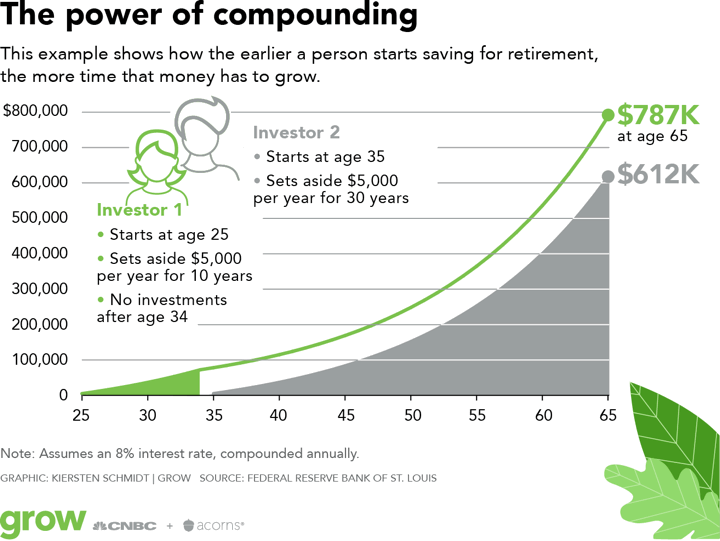
The “Rule of 72” shows us that with just 7.2% annual returns, your money will double every decade from now on. After another 10 years, every $100k will be $200k. After another 10 years, that $200k will be $400k. Once you have that initial momentum, it just keeps going.
Here are my previous “saving for a decade” posts:
- 2022 Edition (January 2012 to December 2021)
- 2021 Edition (January 2011 to December 2020)
- 2020 Edition (January 2010 to December 2019)
- 2019 Edition (January 2009 to December 2018)
- 2018 Edition (January 2008 to December 2017)
- 2017 Edition (January 2007 to December 2016)
Bottom line. Saving now can be hard, especially when you see your investment balances drop. But over time, with consistency and starting early, things smooth out. You can truly build serious wealth with something as accessible and boring as an IRA/401k plan and a Vanguard Target Retirement fund (or a simple collection of low-cost index funds).
 Here’s my 2022 Year-End income update for my


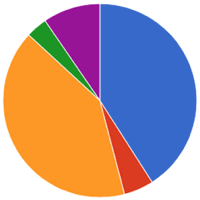 Here’s my quarterly update on my current investment holdings as of the end of 2022, including our 401k/403b/IRAs and taxable brokerage accounts but excluding real estate and side portfolio of self-directed investments. Following the concept of

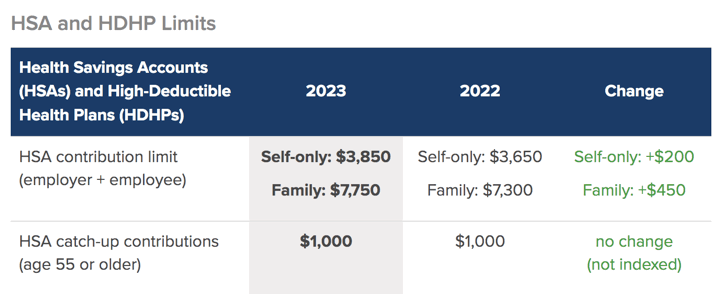
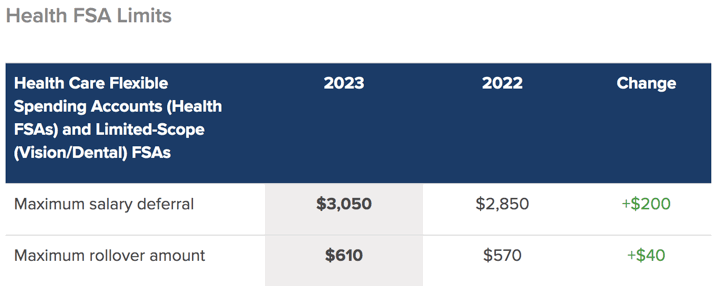
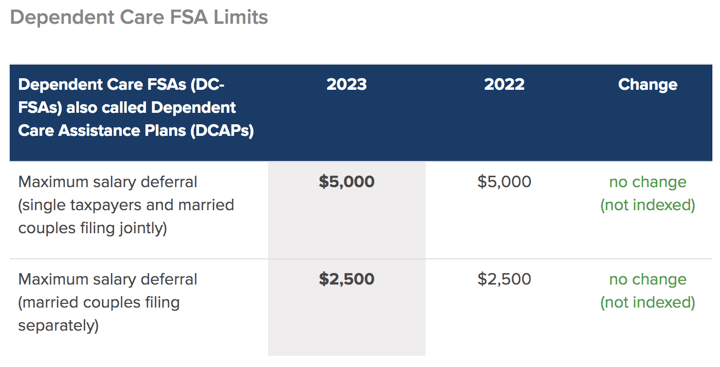
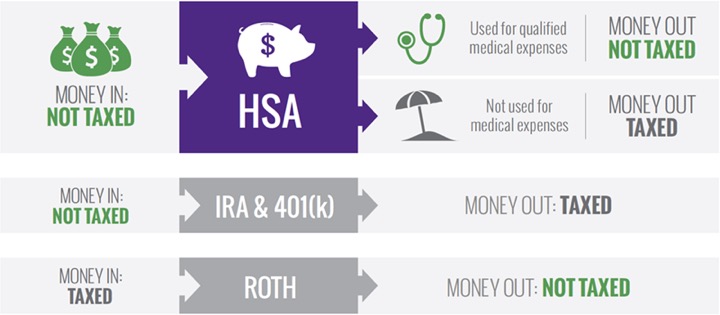
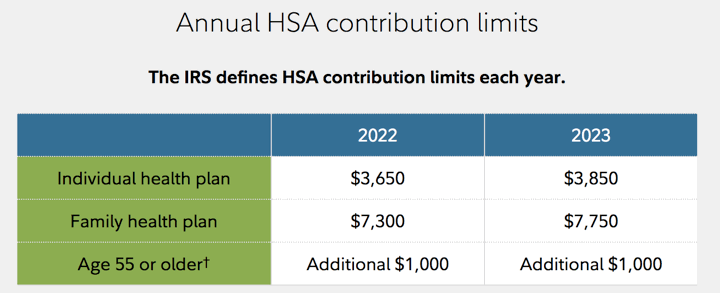
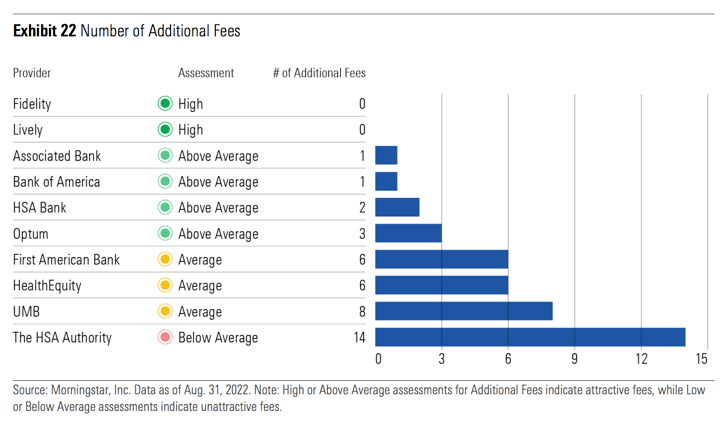
 The beginning of the year is also a good time to check on the new annual contribution limits for retirement and benefit accounts, many of which are indexed to inflation. Our income has been quite variable these last few years, so I regularly adjust our paycheck deferral percentages based on expected income for the year. I still try to max things out if I can, or at least stay on pace to do so. This


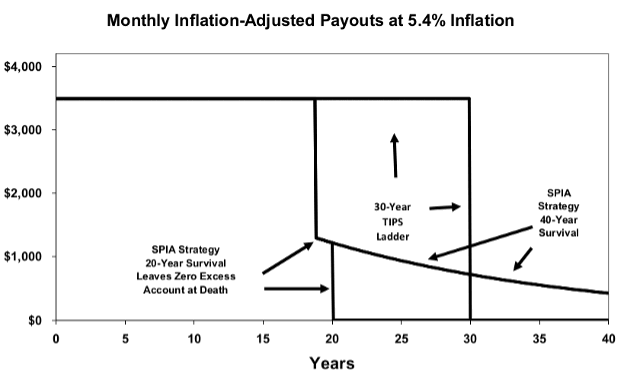


 Retirement income planning would be so much easier if you could buy a known amount of guaranteed lifetime income that automatically adjusted for inflation. However, the reality is that not a single insurance company in the entire world is willing to take on that long-term inflation risk. The only possibility left is to ladder inflation-linked bonds (TIPS) so that each year you would cash out some bonds and interest to create your own DIY inflation-adjusted income.
  Inflation still 🚀 😬 Savings I Bonds are a unique, low-risk investment backed by the US Treasury that pay out a variable interest rate linked to inflation. With a holding period from 12 months to 30 years, you could own them as an alternative to bank certificates of deposit (they are liquid after 12 months) or bonds in your portfolio.
  The Best Credit Card Bonus Offers – 2026
 Big List of Free Stocks from Brokerage Apps
 Best Interest Rates on Cash - 2026
 Free Credit Scores x 3 + Free Credit Monitoring
 Best No Fee 0% APR Balance Transfer Offers
 Little-Known Cellular Data Plans That Can Save Big Money
 How To Haggle Your Cable or Direct TV Bill
 Big List of Free Consumer Data Reports (Credit, Rent, Work)