Here is my 2026 1st Quarter portfolio update that includes all our combined 401k/403b/IRAs and taxable brokerage accounts but excludes our house and small side portfolio of self-directed investments. Following the concept of skin in the game, the following is not a recommendation, but a sharing of our real-world, imperfect DIY portfolio.
“Never ask anyone for their opinion, forecast, or recommendation. Just ask them what they have in their portfolio.” – Nassim Taleb
How I Track My Portfolio
Here’s how I track my portfolio across multiple brokers and account types:
- The Empower Personal Dashboard real-time portfolio tracking tools (free) automatically logs into my multiple accounts, adds up my various balances, tracks my performance, and figures out my overall asset allocation across the entire portfolio. Formerly known as Personal Capital.
- Once a quarter, I also update my manual Google Spreadsheet (free to copy, instructions) because it helps me calculate how much I need in each asset class to rebalance back towards my target asset allocation. I also create a new sheet each quarter, so I have a personal archive of my portfolio dating back many years.
2026 1st Quarter Asset Allocation and YTD Performance
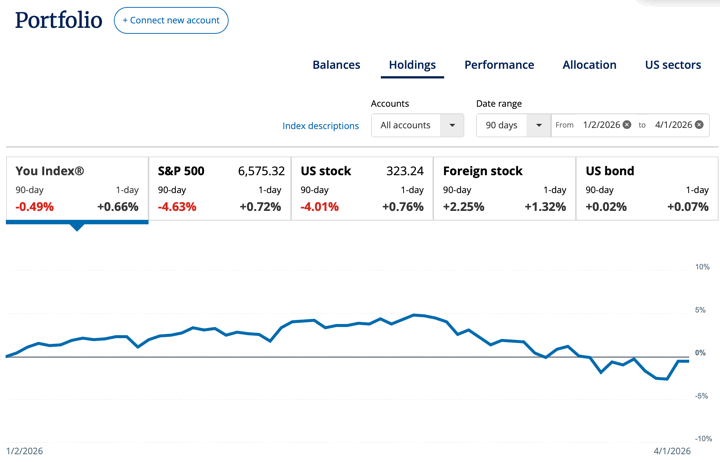
Here are updated performance and asset allocation charts, per the “Holdings” and “Allocation” tabs of my Empower Personal Dashboard.
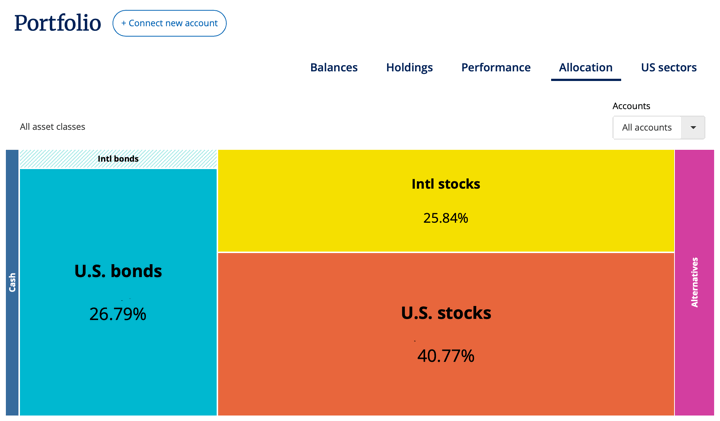
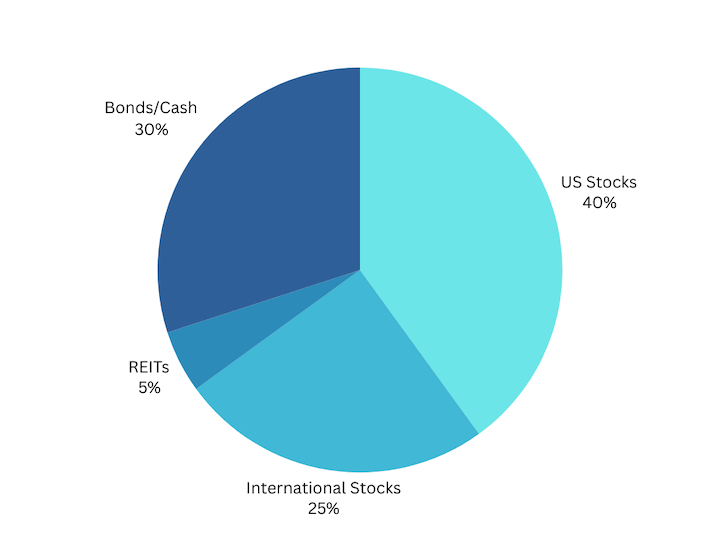
The major components of my portfolio are broad index ETFs. I do mix it up a bit around the edges, but not very much. Here is a model version of my target asset allocation with sample ETF holdings for each asset class.
- 35% US Total Market (VTI)
- 5% US Small-Cap Value (AVUV)
- 20% International Total Market (VXUS)
- 5% International Small-Cap Value (AVDV)
- 5% US Real Estate (REIT) (VNQ)
- 20% US “Regular” Treasury Bonds and/or FDIC-insured deposits (VGSH)
- 10% US Treasury Inflation-Protected Bonds (SCHP)
Big picture, it is 70% businesses and 30% very safe short-term bonds/cash:
By paying minimal costs including management fees, transaction spreads, and tax drag, I am trying to essentially guarantee myself above-average net performance over time.
I do not spend a lot of time backtesting various model portfolios. You’ll usually find that whatever model portfolio is popular at the moment just happens to hold the asset class that has been the hottest recently.
The portfolio that you can hold onto through the tough times is the best one for you. I’ve been pretty much holding this same portfolio for 20 years. Check out these ancient posts from 2004 and 2005. Every asset class will eventually have a low period, and you must have strong faith during these periods to earn those historically high returns. You have to keep owning and buying more stocks through the stock market crashes. You have to maintain and even buy more rental properties during a housing crunch, etc. A good sign is that if prices drop, you should feel the urge to buy more of that asset instead of less. I don’t have strong faith in the long-term results of commodities, gold, or bitcoin – so I don’t own them.
Performance details. Here’s an updated YTD Growth of $10,000 chart courtesy of Testfolio for some of the major index ETFs (total US stock, total international stock, total US bond) that shows the difference in performance in the broad indexes:
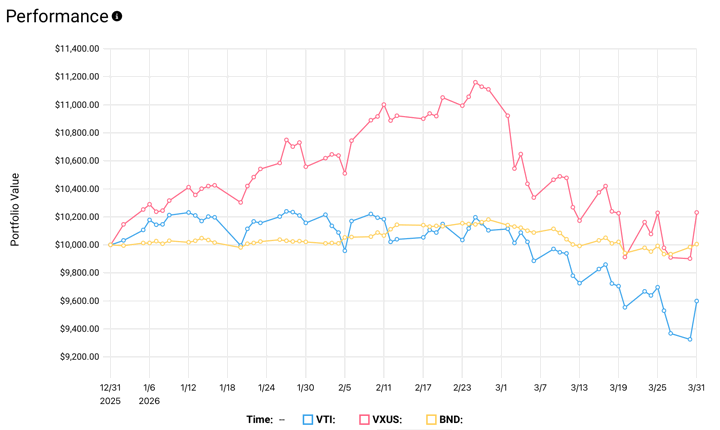
Nearly everything went up in 2025. So far in 2026, if you had a good dose of international stock diversification, you were pretty much flat. I read that the S&P 500 went down about 5%, and the Magnificent 7 went down about 13% in the first quarter. I’ll share about more about the income aspect in a separate post.
 The Best Credit Card Bonus Offers – 2026
 Big List of Free Stocks from Brokerage Apps
 Best Interest Rates on Cash - 2026
 Free Credit Scores x 3 + Free Credit Monitoring
 Best No Fee 0% APR Balance Transfer Offers
 Little-Known Cellular Data Plans That Can Save Big Money
 How To Haggle Your Cable or Direct TV Bill
 Big List of Free Consumer Data Reports (Credit, Rent, Work)
Speak Your Mind